Are you seeing unwanted pop-ups, fake Windows security alerts, suspicious warnings, or repeated messages telling you to call a technical support number? Your computer may be displaying a browser notification, unwanted software message, or a potentially deceptive pop-up.
Fake Windows Pop-Up Removal Help
Some fake alerts may use flashing screens, warning sounds, countdown messages, or full-screen browser windows to make the situation appear urgent.
Do not panic and do not provide passwords, verification codes, banking information, or remote-access credentials to an unknown caller.
Call Toll Free: +1(877)219-3779
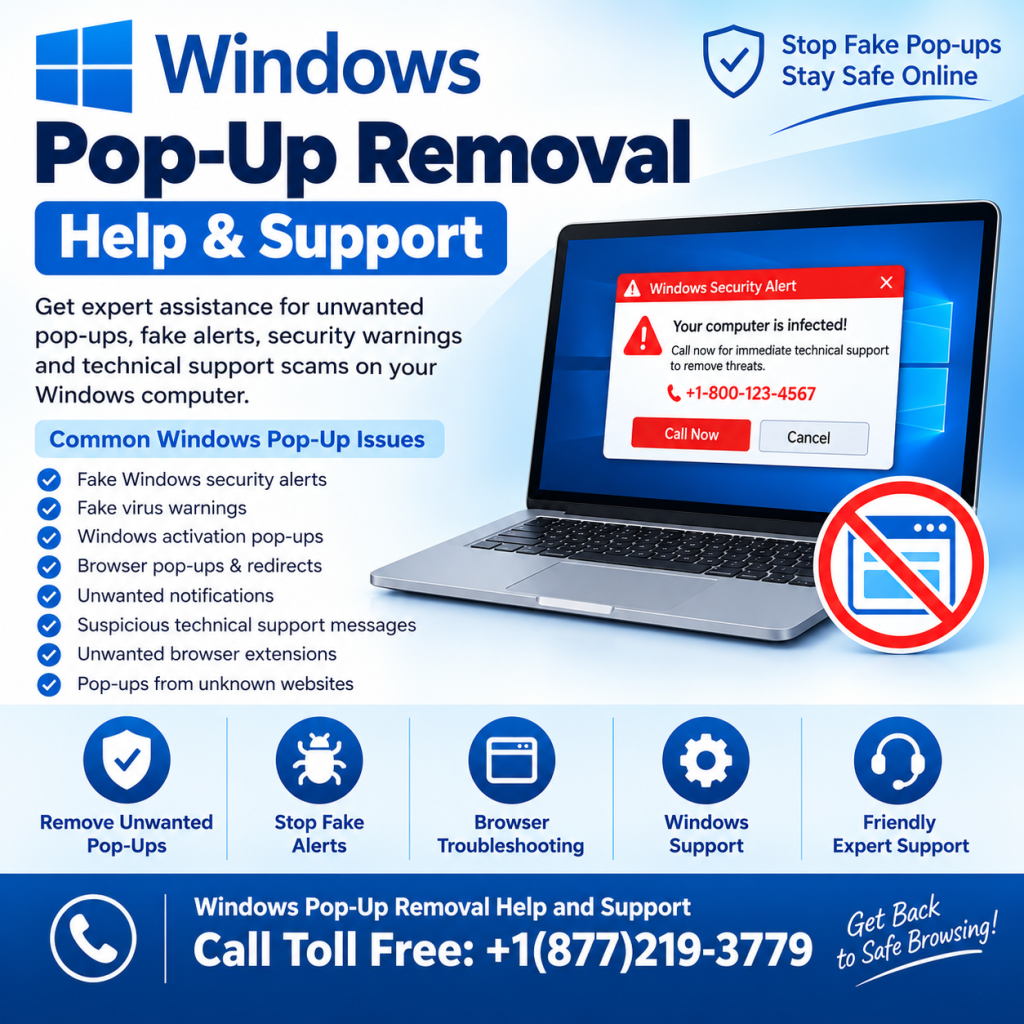
How to Stop Fake Windows Pop-Ups
Close the browser window if possible.
Avoid clicking suspicious links or download buttons.
Do not call an unfamiliar number shown in a pop-up.
Windows Pop-Up Removal Help & Support
Windows Pop-Up Removal, Fake Alerts & Technical Support
Are you seeing unwanted pop-ups, fake Windows security alerts, suspicious warnings, or repeated messages telling you to call a technical support number? Your computer may be displaying a browser notification, unwanted software message, or a potentially deceptive pop-up.
Our Windows Pop-Up Removal Help & Support service provides guidance for identifying and removing unwanted pop-ups, browser notifications, suspicious alerts, and common Windows-related issues.
Call Toll Free: +1 (877) 219-3779 for Windows pop-up removal help and support.
Fake Windows Pop-Up Removal Help
Fake pop-ups are designed to look like legitimate Windows warnings. They may display messages claiming that your computer is infected, your Windows license has expired, your account is at risk, or immediate technical support is required.
Some fake alerts may use flashing screens, warning sounds, countdown messages, or full-screen browser windows to make the situation appear urgent.
Do not panic and do not provide passwords, verification codes, banking information, or remote-access credentials to an unknown caller.
For assistance identifying suspicious Windows pop-ups, Call Toll Free: +1 (877) 219-3779.
How to Stop Fake Windows Pop-Ups
If a suspicious pop-up appears while browsing the internet, avoid clicking unknown buttons or calling a number displayed inside the warning.
You can try the following basic steps:
- Close the browser window if possible.
- Avoid clicking suspicious links or download buttons.
- Do not call an unfamiliar number shown in a pop-up.
- Check your browser notification permissions.
- Remove unfamiliar browser extensions.
- Clear unwanted browser data.
- Run a security scan using trusted security software.
- Keep Windows and your browser updated.
- Restart your computer after completing troubleshooting.
If the pop-up continues to return, Call Toll Free: +1 (877) 219-3779 for troubleshooting assistance.
Windows Security Pop-Up Help
Seeing Constant Security Warnings?
Legitimate Windows security notifications can appear on your computer, but deceptive websites can also imitate Windows security messages.
A suspicious pop-up may claim:
- Your computer is infected
- Your Windows license has expired
- Your files are at risk
- Your account has been compromised
- Your computer needs immediate repair
- You must call technical support immediately
- You must download a security application
- You must allow remote access
These messages should be treated carefully.
Call Toll Free: +1 (877) 219-3779 for help troubleshooting suspicious pop-ups.
Fake Microsoft Pop-Up Removal
Beware of Fake Microsoft Security Alerts
Some scam websites create pop-ups that use Microsoft or Windows-related branding to appear legitimate.
A browser page may display a warning that looks like a Windows system message even though it is actually generated by the website.
Never assume that a pop-up is genuine simply because it contains a Windows logo, Microsoft-style design, or technical terminology.
If you are unsure whether an alert is legitimate, Call Toll Free: +1 (877) 219-3779 for assistance.
Windows Browser Pop-Up Removal
Stop Unwanted Browser Pop-Ups
Unwanted browser pop-ups may be caused by website notifications, suspicious browser extensions, unwanted redirects, or previously granted notification permissions.
If you are repeatedly redirected to unfamiliar pages, check your browser settings and remove permissions for websites you do not recognize.
Common symptoms include:
- Repeated security alerts
- Fake virus warnings
- Unwanted advertisements
- Browser redirects
- Suspicious notification messages
- New tabs opening automatically
- Fake Windows activation warnings
- Fake technical-support messages
- Browser homepage changes
Call Toll Free: +1 (877) 219-3779 for browser pop-up troubleshooting.
Windows Pop-Up Removal Support
Pop-Ups Keep Coming Back?
If closing a pop-up only makes it return later, there may be a browser notification permission, unwanted extension, application, or other software causing the problem.
Our support service can help you work through common troubleshooting steps to identify the source of recurring pop-ups.
Call Toll Free: +1 (877) 219-3779 for Windows pop-up removal assistance.
Fake Virus Pop-Up Help
Is Your Computer Showing a Fake Virus Warning?
Some websites display alarming messages such as “Your computer is infected” or “Immediate action required.”
A browser warning does not automatically mean that your computer is infected.
Do not download unknown software simply because a pop-up tells you to do so.
Instead, close the suspicious page and use trusted security tools to check your computer.
If you need help determining what to do next, Call Toll Free: +1 (877) 219-3779.
Fake Windows Activation Pop-Ups
Windows Activation Warning Appearing in Your Browser?
Some deceptive websites display fake Windows activation warnings and encourage users to call an unfamiliar telephone number.
A browser pop-up claiming that Windows must immediately be activated should be treated with caution.
To check your actual Windows activation status, use the Windows Settings application rather than relying on a browser pop-up.
If you need help troubleshooting a genuine Windows activation problem, Call Toll Free: +1 (877) 219-3779.
How to Identify a Fake Technical Support Pop-Up
A suspicious pop-up may have several warning signs.
Unexpected Urgency
The message may tell you that you must act immediately or your computer will be damaged.
Unknown Phone Number
The pop-up may display a phone number and instruct you to call immediately.
Request for Remote Access
A scammer may ask you to install remote-access software or provide access to your computer.
Requests for Payment
Be cautious if an unexpected pop-up asks for payment to remove an alleged infection.
Suspicious Downloads
Do not install unknown applications simply because a website claims that they are required to fix your computer.
Fake Error Messages
Some websites imitate Windows system screens to make a browser page look like a genuine operating-system warning.
If you encounter these warning signs, Call Toll Free: +1 (877) 219-3779 for help.
Remove Unwanted Browser Notifications
Stop Repeated Website Notifications
A website may have previously received permission to send notifications to your browser.
These notifications can sometimes appear on the Windows desktop even after you have closed the original website.
To troubleshoot:
- Open your browser settings.
- Find notification or site-permission settings.
- Review websites that have permission to send notifications.
- Remove permissions for unfamiliar websites.
- Restart your browser.
If you need assistance finding these settings, Call Toll Free: +1 (877) 219-3779.
Remove Suspicious Browser Extensions
Unwanted Extensions Can Cause Pop-Ups
Browser extensions can modify browsing behavior and may sometimes contribute to unwanted advertisements, redirects, or pop-ups.
Review your installed browser extensions and remove extensions you do not recognize or no longer need.
Only install browser extensions from trusted sources.
For assistance troubleshooting unwanted browser behavior, Call Toll Free: +1 (877) 219-3779.
Windows Pop-Up Removal for Chrome, Edge & Firefox
Google Chrome Pop-Up Help
If unwanted pop-ups appear while using Chrome, review site permissions, notifications, extensions, and browser settings.
Microsoft Edge Pop-Up Help
Microsoft Edge users can review website permissions, notification settings, extensions, and other browser controls to identify unwanted sources.
Mozilla Firefox Pop-Up Help
Firefox users can review notification permissions, extensions, pop-up settings, and website permissions.
If you need help troubleshooting browser pop-ups, Call Toll Free: +1 (877) 219-3779.
Contact a Microsoft Certified Technician
Need Professional Windows Troubleshooting Help?
If you are unable to remove persistent pop-ups or are unsure whether a warning is legitimate, professional technical assistance may help.
Contact a Microsoft-certified technician or qualified Windows support professional for assistance with your specific computer problem.
Call Toll Free: +1 (877) 219-3779 to request Windows pop-up troubleshooting assistance.
Important: Do not provide your Microsoft account password, Windows password, one-time verification code, banking information, or other sensitive credentials to an unknown person.
Windows Technical Support for Pop-Up Problems
Our support service can provide guidance for common Windows and browser issues, including:
- Fake Windows pop-ups
- Fake virus alerts
- Browser pop-ups
- Suspicious security warnings
- Unwanted browser notifications
- Browser redirects
- Suspicious browser extensions
- Fake Windows activation warnings
- Unwanted advertisements
- Recurring technical-support alerts
- Browser troubleshooting
- Windows security troubleshooting
- General Windows troubleshooting
Call Toll Free: +1 (877) 219-3779 for help with common Windows pop-up problems.
Why Choose Our Windows Pop-Up Support?
Simple Troubleshooting Guidance
We explain common troubleshooting steps in clear and easy-to-understand language.
Help Identifying Suspicious Alerts
We can help you understand the difference between common Windows notifications and suspicious browser-generated warnings.
Browser & Windows Support
Our support covers common browser and Windows troubleshooting scenarios.
Security-Conscious Assistance
We recommend safe practices and do not encourage users to disclose confidential passwords, verification codes, or financial information.
Frequently Asked Questions
How do I stop fake Windows pop-ups?
Avoid clicking suspicious messages and check your browser’s notification permissions, extensions, and site settings. A trusted security scan can also help identify unwanted software.
Is every Windows security pop-up a real Microsoft warning?
No. A webpage can create a pop-up that looks like a Windows or Microsoft security message. Always verify the source before taking action.
Should I call the phone number shown in a pop-up?
Do not automatically call a number displayed in an unexpected pop-up. Verify the source independently before contacting technical support.
Can a browser create fake virus warnings?
Yes. Websites can display convincing fake virus or security warnings inside the browser.
Why do pop-ups keep appearing after I close them?
Recurring pop-ups may be related to browser notifications, website permissions, extensions, unwanted software, or repeated redirects.
How do I remove unwanted browser notifications?
Review your browser’s notification permissions and remove permissions for websites you do not recognize.
Can you help with Windows activation pop-ups?
Yes. We can provide general troubleshooting guidance for genuine Windows activation problems and help you distinguish suspicious browser warnings from normal Windows settings.
Will you ask for my Microsoft password?
No. Never share your Microsoft account password, Windows password, verification code, or other confidential credentials with an unknown support representative.
Get Windows Pop-Up Removal Help Today
Don’t let suspicious pop-ups, fake security warnings, browser redirects, or unwanted notifications disrupt your computer use.
If you are seeing a fake Windows warning, fake virus alert, suspicious Microsoft pop-up, Windows activation message, browser notification, or technical-support scam message, stop before providing personal information or installing unknown software.
Get professional troubleshooting guidance for common Windows pop-up problems.
Need Help Now?
Call Toll Free: +1 (877) 219-3779
Get assistance with Windows pop-up removal, fake pop-up troubleshooting, browser notification problems, suspicious security alerts, and common Windows support issues.
Important Disclaimer
We provide independent technical support and troubleshooting assistance. We are not affiliated with, sponsored by, or endorsed by Microsoft Corporation unless explicitly stated otherwise.
Microsoft, Windows, Windows 10, Windows 11, and related trademarks belong to their respective owners.
Important: The phrase “Microsoft-certified technician” should only be used for a technician who actually holds a current Microsoft certification. Do not claim Microsoft certification if it cannot be verified.
For your security, never provide your password, one-time verification code, banking information, or other confidential credentials to anyone claiming to provide technical support.